Murat
Yıldız
When you create works using flowers, what do you want the viewer to feel or notice first?
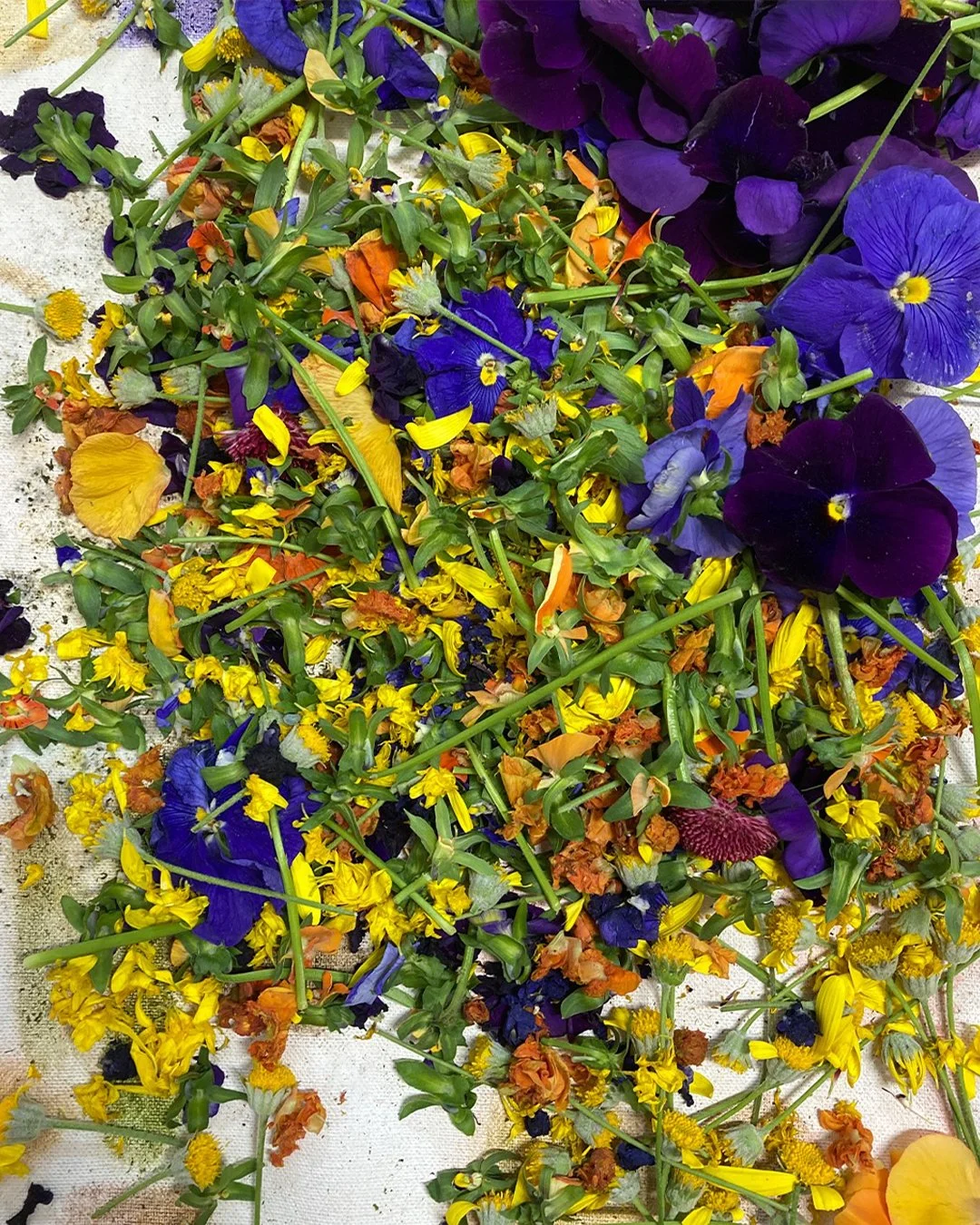
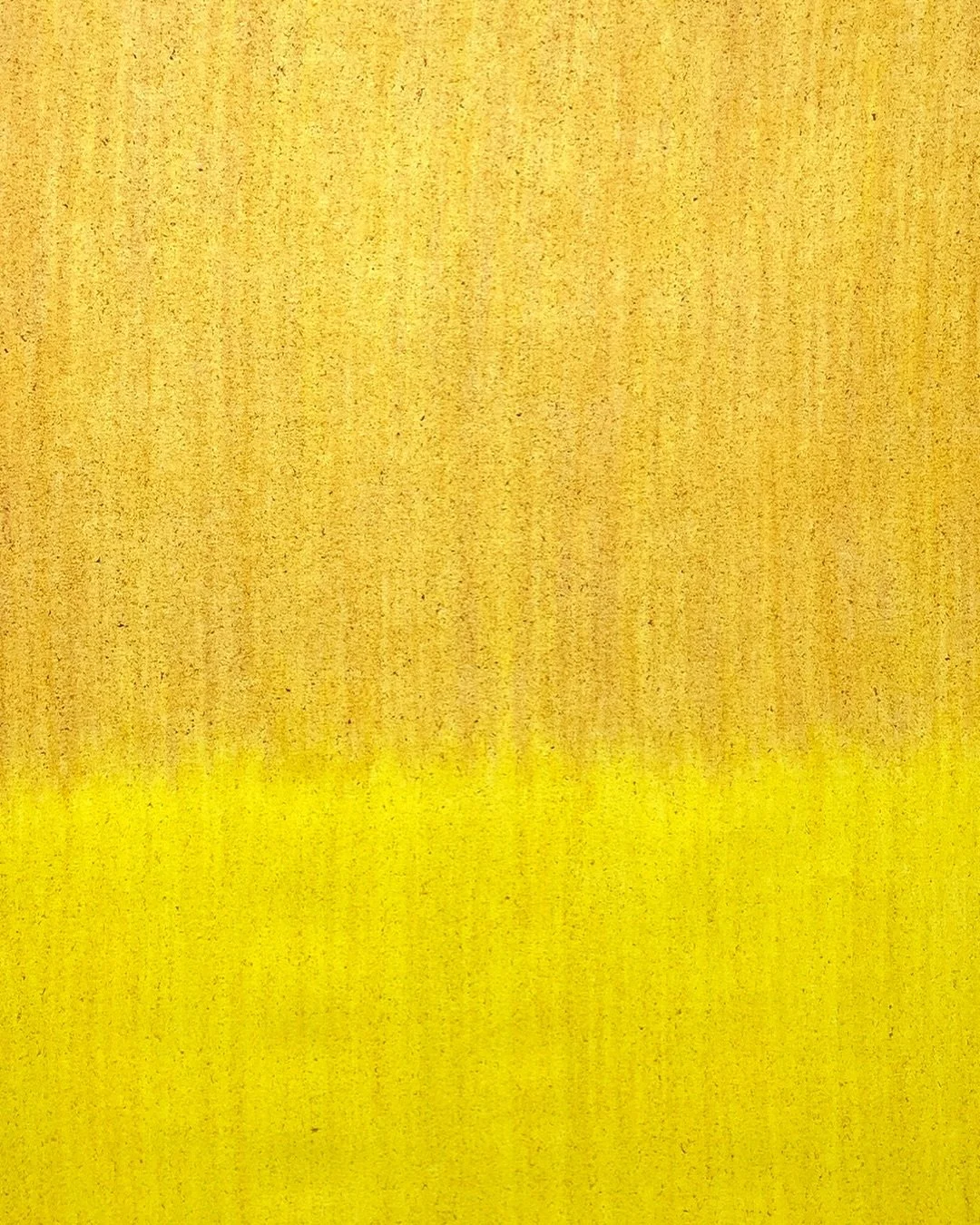
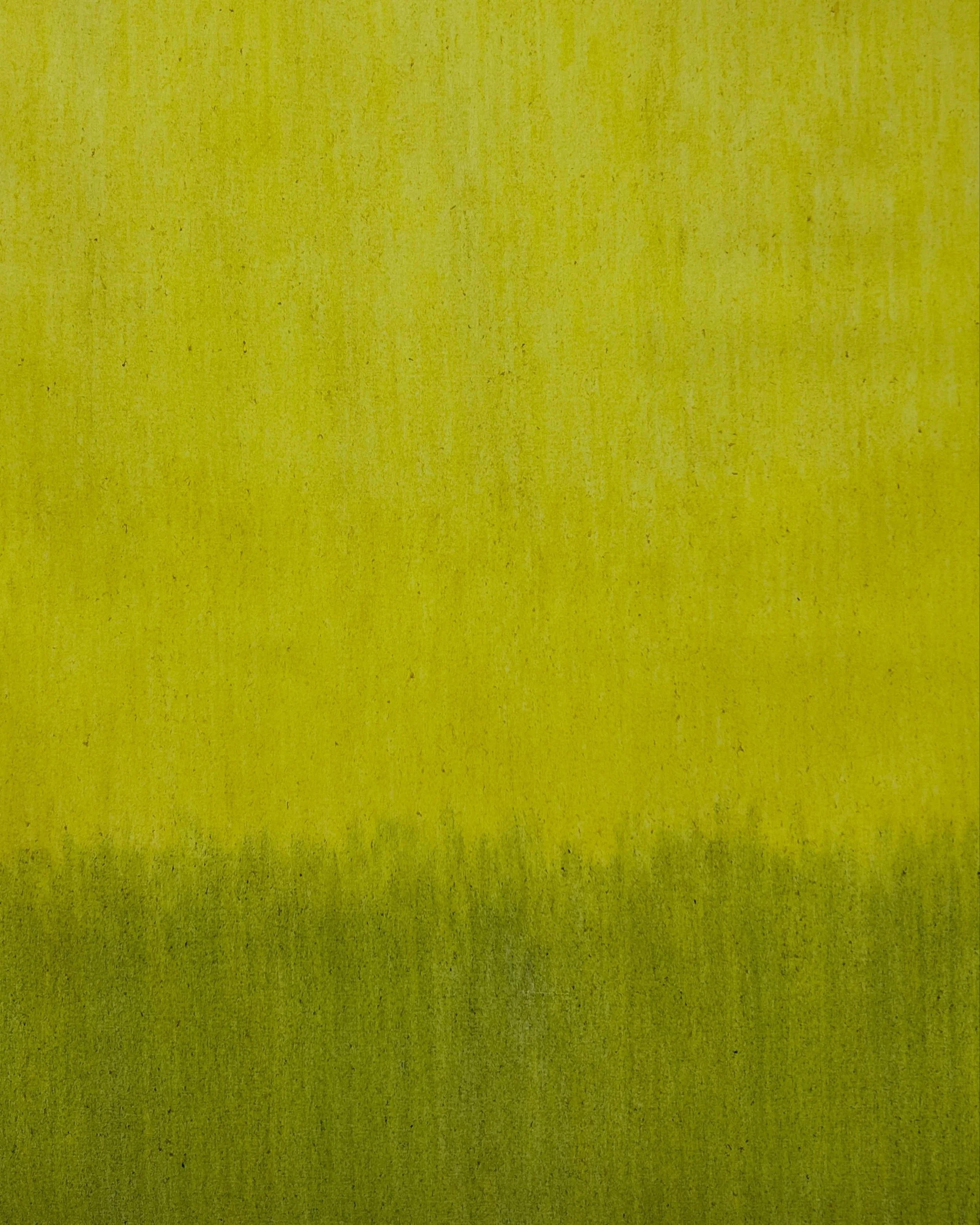
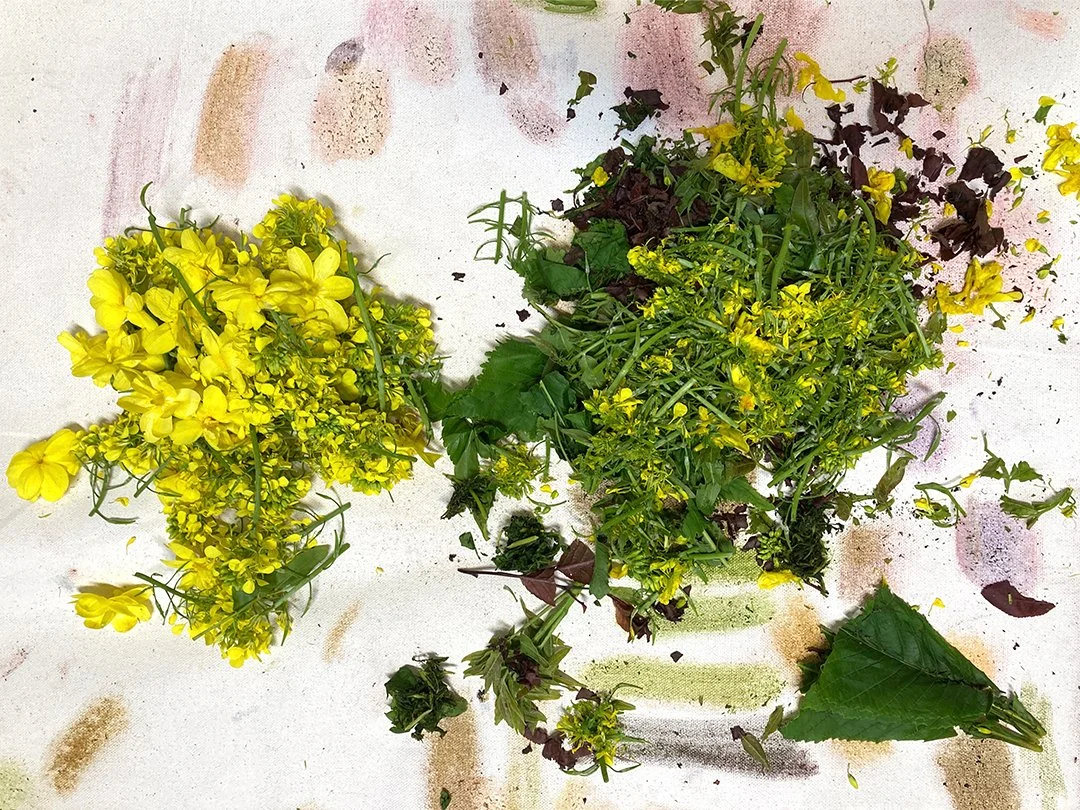
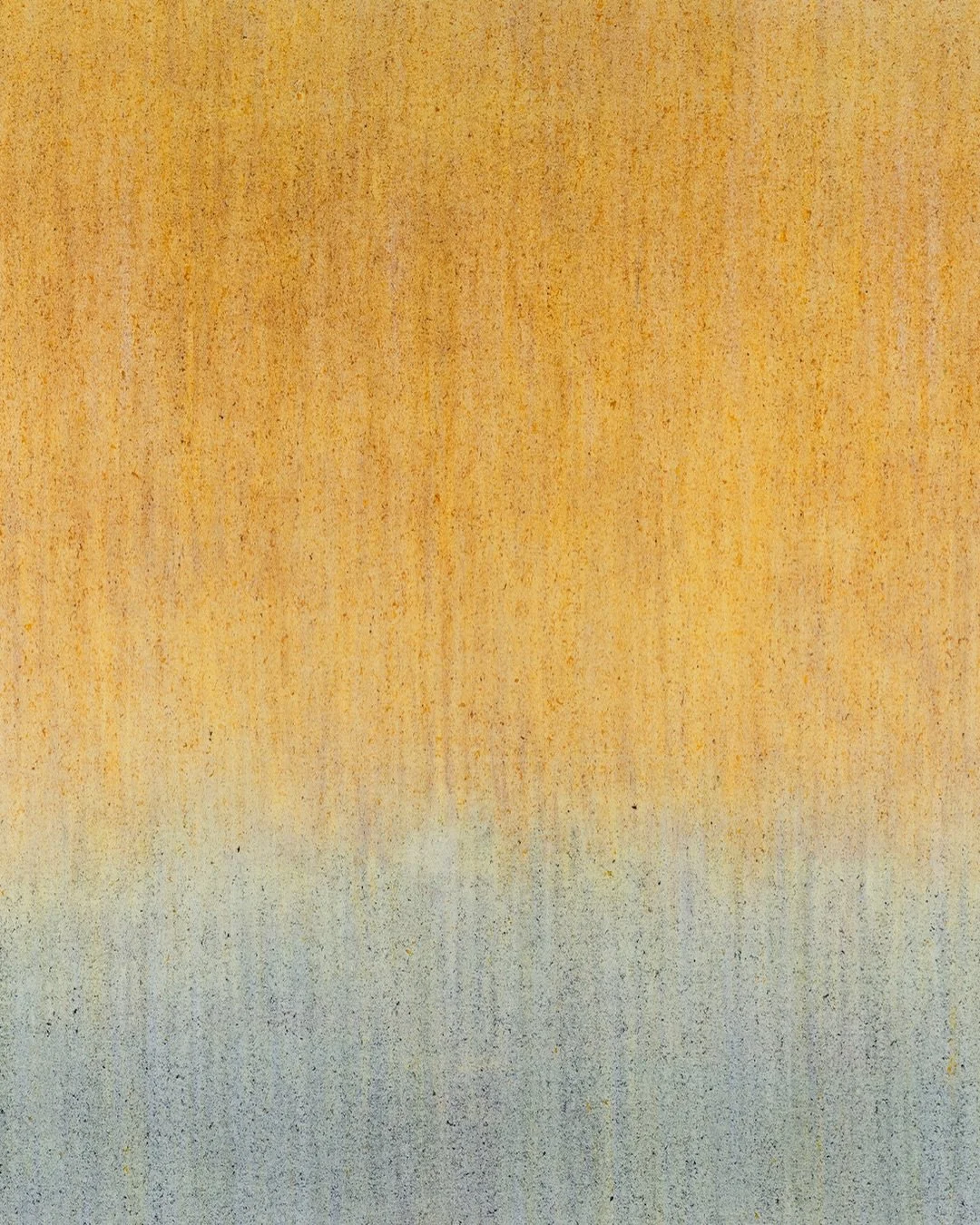
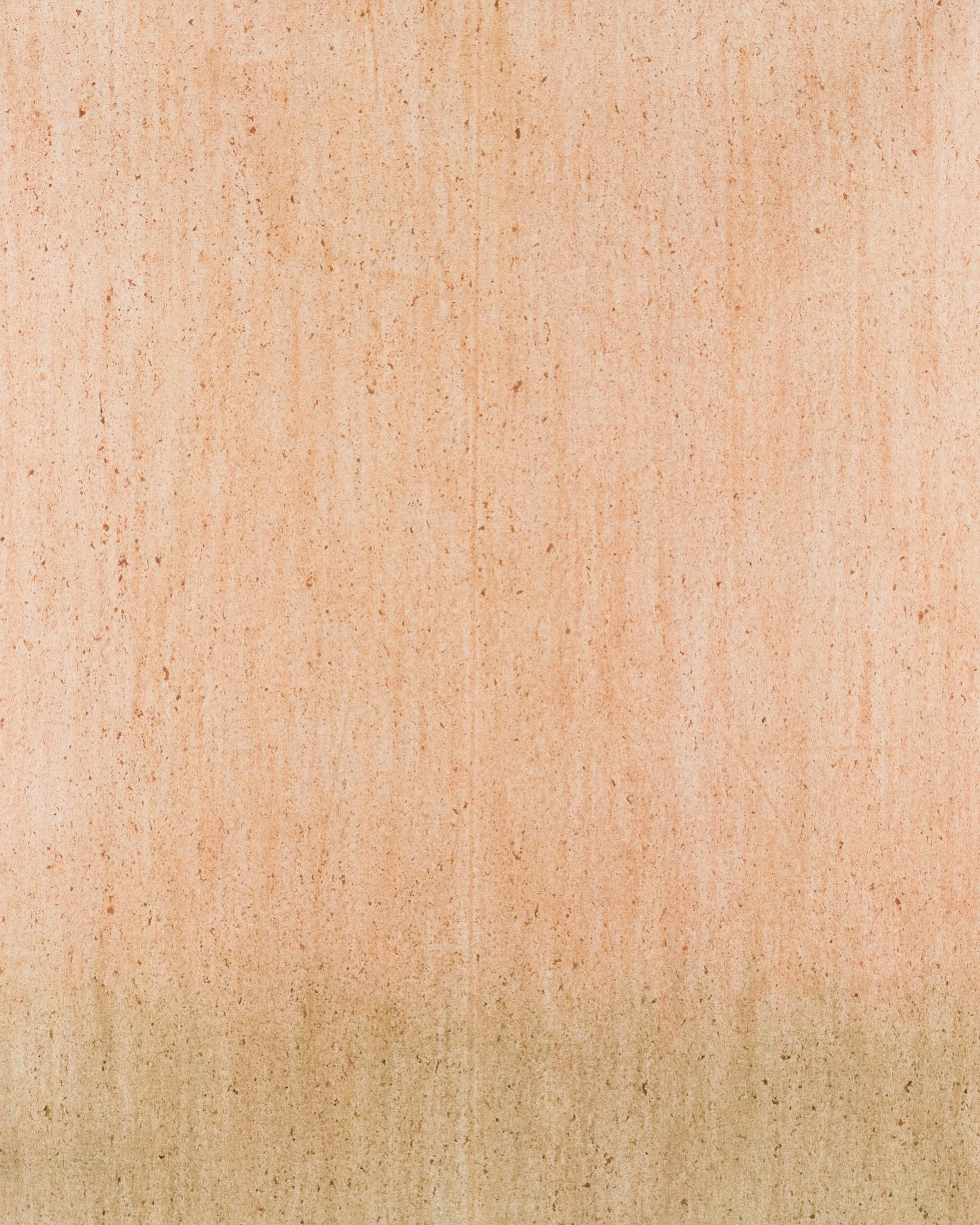
When people approach the painting, I don’t want them to say, “This is a painting of a flower.” I want them first to feel that they are looking at something familiar that they cannot quite name. Because what is there is not a representation of the flower, but the flower itself. Its pigment, texture and physical body have been transferred directly onto the canvas. I don’t use a brush. I make the paintings by rubbing the flowers onto the canvas.
What I want them to notice afterwards is that the image is not fixed. The colours fade, and the work continues to live and change. So there is first a sense of familiarity, followed almost immediately by a sense of impermanence. Because it is completely unprotected, perhaps one day it will disappear entirely and only an empty canvas will remain. I don’t know.
You must have spent a great deal of time in nature while creating this series. How did that process of observation and physical contact affect you?
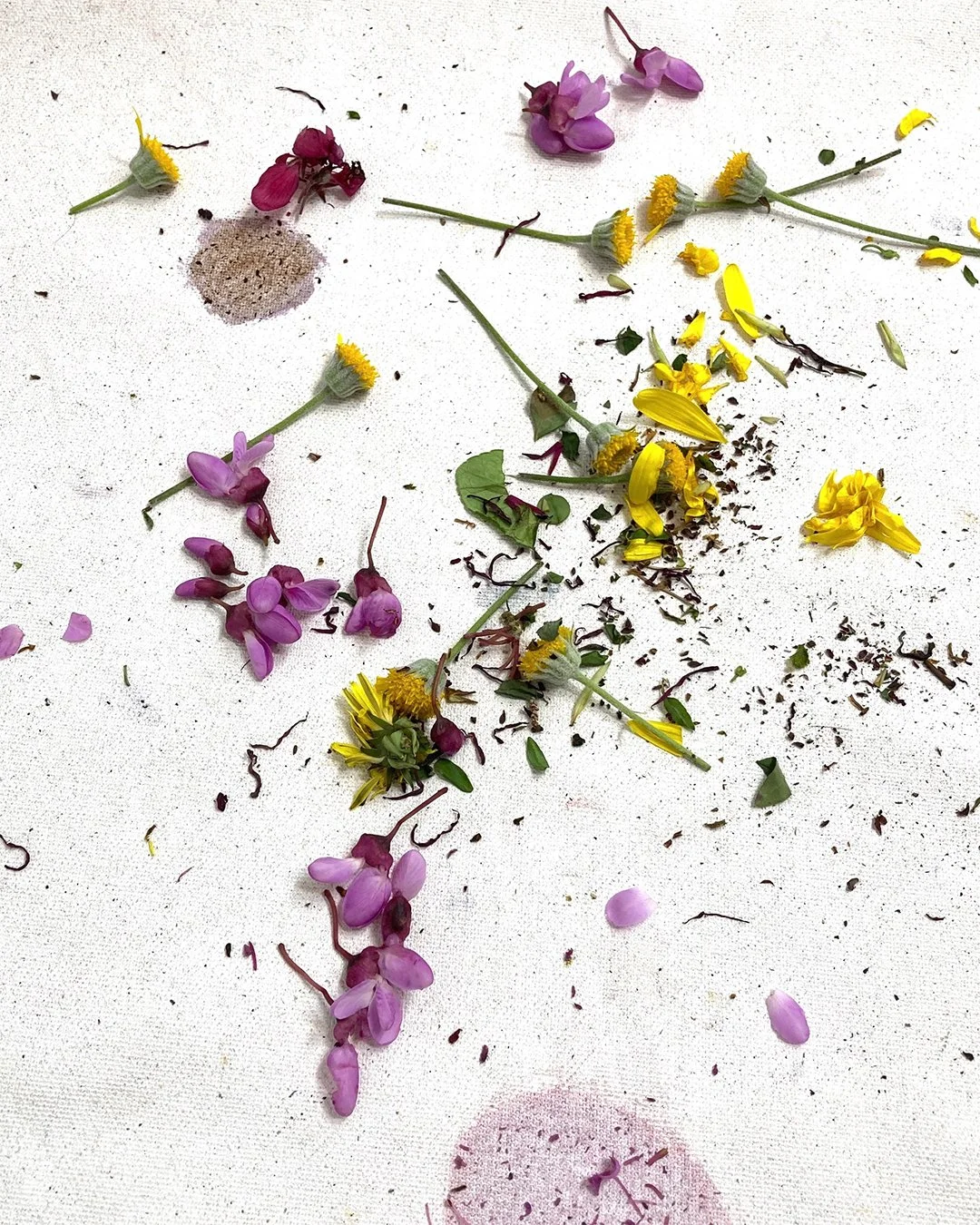
The Flowers and Leaves series took three years. I made the flower paintings using flowers I collected in the Netherlands, Latvia, Romania and Turkey. In a sense, I became a student of flowers. I came into contact with thousands of flowers and leaves, getting to know and observe them closely.
This series slowed me down. Collecting flowers means working according to the seasons rather than the calendar. You learn to accept whatever nature gives you that day. You take what is there, not what you want.
What surprised me most was that a flower does not necessarily produce the colour it appears to have. A red flower can leave a purple trace, a yellow flower a green one. And this works differently with every flower. So I paint with the flowers I collect without knowing what colour will emerge. The moment I rub one onto the canvas, it releases its most vivid colour, but at that very same moment it begins to fade. Its brightest state lasts only a few seconds.
Once, I brought a painting made with linden leaves I had collected in Latvia back to Istanbul, and the painting almost seemed to come alive. The colours deepened. I think it may have been because of the humidity. Perhaps the dried plant absorbed moisture from the air again. Istanbul’s sea air is different from Latvia’s dry climate. But I’m not certain. Maybe it was something else.
The seasons enter the body too. Spring and summer flowers are softer, while in winter they become harder. When I work during winter, my fingertips bleed.
That is why physical contact is so important. These are not objects I observe from a distance. They are things I rub, smell and feel disintegrate in my hands. This intimacy has diminished my desire for control. I have become someone who observes more and imposes less. The rest of my practice connects to the same idea. Agency is not something to be controlled, but something to surrender to.
Flowers have a significant place in art history. Are there artists who have influenced or inspired you?
I’m aware of the significance of flowers throughout art history. But I’m less interested in artists who represent them than in those who work directly with materials, allowing decay and impermanence to become part of the work. In that sense, I feel close to herman de vries and his direct use of nature. Giuseppe Penone’s way of bringing the body and nature onto the same plane, Félix González-Torres’s works that melt, diminish and disappear through their interaction with the viewer, and Jackson Pollock’s surrender to gesture have all been important to me.
Then there is James Turrell. He uses light itself as a material, creating works that continually change throughout the day and across the seasons. There is a feeling I get from his work, “The work remains the same, you are the one who changes,” that feels very familiar to me.
Monet, too, was not really painting water lilies, haystacks or cathedrals. He was painting light and time. He painted the same pond hundreds of times at different hours of the day, capturing a different moment each time. While appearing to represent something, he was actually painting impermanence itself. I find that surprisingly close to what I am trying to do with flowers.
What does making flowers permanent through your art mean to you?
To be honest, my intention is not to make them permanent. I don’t use any protective coating or fixative. On the contrary, I allow them to fade. For me, it is not about taking the flower out of time, but keeping it within time.
The work does not freeze an object. It records a transition.
If there is anything “permanent,” it is impermanence itself, and the sense of peace that comes with accepting it.
Is there a new creative process occupying your mind at the moment?
At the moment, I’m working on a new series of drawings with coloured pencils. Amorphous, hybrid and aggressive figures are emerging. They will be shown at Artissima in Turin in October. They look quite different from the flower works, but they grow from the same root. I’m interested in observing something that moves beyond my intention and begins to take shape on its own.
Another area developing alongside this is Self So. I make furniture and objects from recycled industrial paper. I see it as a natural extension of my artistic practice. These objects also work with time. Heat, humidity and the pressure of the hand transform their forms. I imagine something at the beginning, but in the end, even I don’t fully recognise what emerges.